5 Factors to choose your steel supplier

5 Factors to choose your steel supplier

Steel is a hugely popular metal used in residential, commercial or large construction projects. With many options, it can be overwhelming to select a steel fabrication supplier for the first time. It is important to do your research and perform due diligence on a company before signing a contract however, this is not always possible through online sources. 

Asking the right questions of your potential supplier is important and sometimes, the best way to research their credentials.

If you’ve never worked with a metal supplier before, consider the following factors before choosing one:

1. Product and Fabrication Range

Choose a supplier with a wide product range so that you can have all your steel requirements met instead of sourcing them from different companies, and the inherent planning and delivery problems that comes with this.
Tekmetsan is a one stop shop for all your steel structure needs.
We have an experienced in-house design department and sophisticated fabrication workshop to meet all your expectations.

2. Design Capabilities and Technology

The best manufacturers of steel structures have experienced designers who will create an individual design according to the customer’s guidelines.
They are not afraid of making changes at various stages and they are able to incorporate thought future modifications, e.g. additional features, expansion, a changed layout, or even a transfer of the steel building to another location.
Our great design team and fabrication capabilities enable us to offer highly customized solutions for changing client needs.

3. Experience & References

A company that has been on the market for a long time is a safe choice. Make sure that the steel manufacturer you choose meets all your expectations, check and look at the projects that have been delivered by the company to be sure.
If there are many you can be confident that the company has the ability to deliver steel halls of all kinds.
The best manufacturers list interesting projects on their websites. Tekmetsan has a broad range of project references all around the world.
4. Production Quality

Before selecting a supplier, make sure that they do not provide substandard and poor-quality materials and tools. To ensure that this does not happen, look through the history of a before choosing them.
If the supplier is recognized for good quality products, then you can rest assured that they would offer reliable products.
Tekmetsan production systems is certified by leading German intuition Tuv-Nord on a yearly basis and all our products are CE certified.

5. Customer Support and Reliability

At Tekmetsan, we work hand in hand with clients to understand their ideas, enabling us to deliver the best possible service, on time, on budget and with the safety of everyone in mind.
As we have been in operation for over 10 years we have a high returning customer base from both small private clients to leading brands.
With our excellent customer service and transparent quotations, you can rest assured we have your best interests at heart in saving you money on your project.
Customer service is like steel—it’s ultimately the foundation of all we do. From the moment you contact our customer service representatives, you will be expertly guided through the design of a structure tailored to your exact specifications, right down to the foundation, trim and paint.
When you ask for pricing on a building or components, you receive a quote with an easy-to-follow detailed description. We follow up with a materials list that accompanies the delivery of your building. Our customer service department continues to assist you after your building has been delivered.

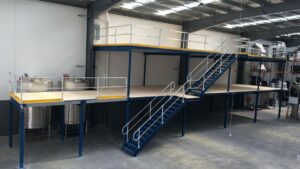
Steel Mezzanines

Steel Mezzanines

When it comes to increasing space, it is more economical to building up rather than to expanding outward. Mezzanines are the most common solution for building additional space inwards. A mezzanine is an intermediate floor inside a building, usually with direct access from the inside of the building.

There are a few different types of mezzanine construction, depending on the size and application. To ensure the right solution for your needs, you need to understand the variety of structural options and decking types available.

Cold rolled refers to the method of forming sheet metal into a c-channel to use as the framework of the mezzanine floor.
Cold-rolled material is much lighter than structural steel and therefore easier to handle. It can also be pre-galvanized; offering a substantial savings over painted, hot-dipped galvanized mezzanines.
Cold rolled sections are generally used as a primary or secondary beam member rather than column members.

The major disadvantages of cold-rolled mezzanines is the very limited column spacing (usually 3-4 meters max) and the inability to reach the high live loads or heavily concentrated point loads accomplished with hot rolled mezzanine systems.
Structural steel mezzanines are constructed of structural I beams, which connect to tubular columns or I-beam columns to form a primary frame.

The greatest benefit of structural steel is allowing bigger column spacing. Column spacing can increase up to 8 meters without compromising the dead and live loads on the mezzanine floor.
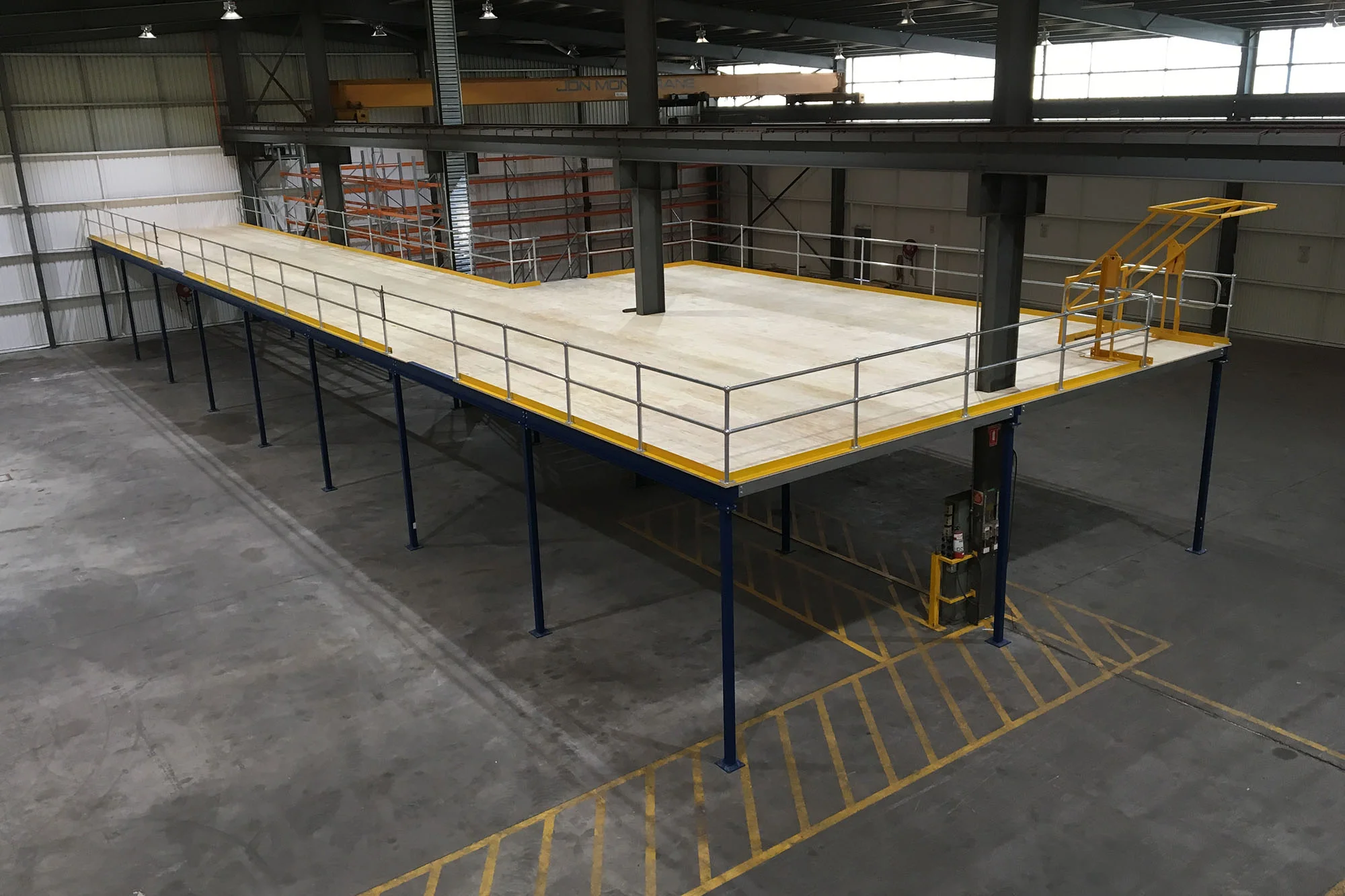
This means more material can be stored in a smaller area ⎯ with more space for manoeuvrability underneath.

Your mezzanine does not depend on the building for support and can be used as a totally freestanding structure or can be combined with your existing equipment.
Our mezzanine floors are individually designed and engineered to suit your specific needs.

Flooring or Decking Type

Since the type of mezzanine decking you choose will be determined by a variety of circumstances, you have a lot of options when it comes to designing your flooring system.
Whether you’re establishing an office and need a deck to support the building’s visual appeal, storing large goods and require a reinforced material to offer adequate support, or anything else, the correct decking will ensure that your floor is perfectly finished.

Tekmetsan, as experts in this field, would be delighted to assist. We’ve got you covered on everything from the suitability of mezzanine decking to which materials look best.

The most durable type of mezzanine decking is concrete. Concrete should be utilised in high-capacity industrial and military applications where the mezzanine is considered permanent since it has a high point load and negligible noise transmission through the deck.
Steel decking comes with a pour stop that allows you to pour up to 15cm of concrete.

In the waste management, mining, and food service industries, steel grating, also known as bar grating or press-locked grating, is a popular alternative.
Air, light, heat, and fluids may all pass through the deck surface thanks to steel grating. It’s powerful, long-lasting, and almost maintenance-free.

Most economical selection for general storage and office applications is the OSB flooring. OSB provides good resistance to foot traffic and can handle random wheel loads up to 150 kg.

Produced from hot-rolled steel, alongside its structural configuration made up of an evenly distributed raised pattern, our chequered plate flooring type is extremely robust and durable as well as anti-slip as standard.

Conclusion

Our mezzanine floors are individually designed and engineered to suit your specific needs.
• Maximise existing floor space into profitable rentable areas
• Increase net rentable areas by utilising full building heights
• Fully engineered and certified
• Metal fabricated stairs and Balustrades

Metal Cladding Options

Metal Cladding Options

Aluminium Composite Panels ( Alucobond)

Aluminium Composite Panels are a lightweight metal cladding ideal for external facades and rain screen cladding amongst other applications.
Aluminium Panels are a composite panel consisting of two aluminium cover sheets and a mineral-filled polymer core.
The surfaces are coated using exclusively high quality and eco-friendly lacquer systems making them weather resistant. These panels can be fully recycled.

It is the combination of formability, flatness, stability and weather resistance that characterises this façade panel as an excellent option for a building façade.
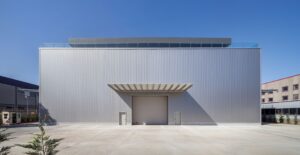
There are two ranges from aluminium composite panels which Tekmetsan supply:
• Fire rated to EN 13501-1 class B
• Fire rated to EN 13501-1 class A2
Tekmetsan offer a complete fabrication service for aluminium facades, please contact our technical department for details.

Insulated Panels (Sandwich Panels)

A modern solution for both residential and commercial construction projects, sandwich panels are composite elements that can be used to build floors, walls, and roofs. Also known as insulated panels, sandwich panels consist of an insulation layer, known as the core, ‘sandwiched’ between two structural layers.
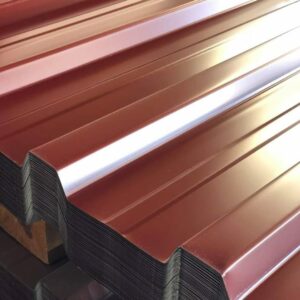
Thanks to advancements in construction materials, sandwich panels have come a long way from their early prototypes. Nowadays, these panels can be engineered to withstand a variety of internal and external conditions, which makes them a popular choice for both interior and exterior use – meaning walls as well as façades, ceilings as well as roof systems.
Airtight sandwich panels are also an excellent choice for building cold store units, which require specific interior climate conditions to safely store anything from foods to medicine. The performance of sandwich panels varies depending on the materials used for its core and its exterior layers, often referred to as the sheathing.
These days, the most popular materials for the core are expanded polystyrene (EPS), extruded polystyrene (XPS), polyisocyanurate (PIR), polyurethane (PUR), mineral wool (MW). Although each material comes with its own advantages and disadvantages, PIR and PUR cores are generally more resistant to water and fire than EPS or XPS cores, and are more durable than mineral wool or other materials.

Regardless of the materials used, one of the greatest advantages of sandwich panels is that they are much faster to install as compared to ‘built-up’ systems requiring multiple components. Instead of requiring walls and roofs to be assembled step-by-step – a process which is prone to delays as well as errors in construction – sandwich panels are factory pre-engineered to be single-component systems, requiring minimal time and energy to be built. This, in turn, translates to significant savings in labour, time and material costs for builders.

Tekmetsan offers a complete design and procurement services for the sandwich panel cladding and roofing projects

Single Skin Metal Sheet

Tekmetsan offer a self-supporting steel profiled single skin cladding system suitable for both roof and walls. The profiles consist of a coated steel outer sheet rolled to several cladding profiles which can be used to form roofs and for wall cladding. 
The single skin offering includes a comprehensive range of fixings, sealants, flashings and roof lights.

Perforated Aluminium

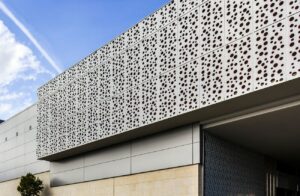
Cladding a building with perforated metal is a very effective way to enliven the facade of what would otherwise be a simple cubed structure. … 
Large perforations allow more natural light to pass through the cladding, but still protect buildings that have large glazed elements from direct sunlight.

Perforated metal panels are produced by punching holes of different shapes and sizes into cold sheets of metal to create various patterns. 

Available in a large variety of finishes including powder coated and anodised, perforated metal provides designers and architects with the freedom to create a diverse range of patterns and designs. 

The amount and size of the perforations are a critical factor for consideration in the design process. We can supply round, square or special-shaped perforated systems as well as bespoke perforated or embossed patterns to suit your project design requirements.

A range of tools can be utilised alongside punching machines to create different perforations or emboss patterns that can be either convex or concave.

The material work hardening properties that result from the embossing process create a much stronger panel solution. As well as the aesthetic properties, perforated panel systems are an effective method of satisfying ventilation and solar shading requirements.

Our specialists can provide expert advice and guidance to assist you in selecting the appropriate format of perforated metal panel to suit individual budgets, designs and installation requirements.

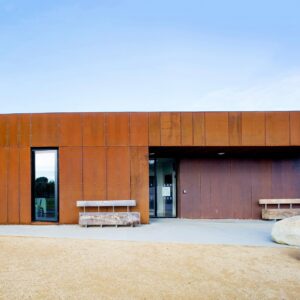
Weathering Steel

When exposed to atmospheric conditions, Weathering Steel undergoes an oxidisation process, where protective layers develop on the material’s surface. These layers contribute to performance and create the metal’s rust coloured architectural aesthetic.

When first installed Weathering Steel is grey in colour. Once exposed to atmospheric conditions, the oxidisation process begins. It can take several months for the material to fully transform, morphing from grey into bright orange, and eventually settling into a deep golden brown.

As with any distinctive façade material, weathering steel ( often also referred as Corten steel) specifications require considerable thought and planning, however, as a growing number of projects have shown, when used well it can deliver truly iconic buildings which will continue to change and surprise over time.

Sourcing building materials from Turkey

Sourcing building materials from Turkey

Tekmetsan not only produces steel buildings but also assists its clients with construction project management and procurement of construction materials from Turkish vendors.
Our Procurement department have vast experience with various Turkish construction material manufacturers. We assist our clients to find right materials from reliable sources.

What information do you need from me to start the product sourcing service?

We will need your product photos, specifications, estimated order quantity, and your target price.
The more detailed the information the better it will help our product sourcing agents find the most suitable suppliers.

How soon will I receive a product quotation?

Depending on the complexity of the product, our product sourcing lead time is 3 to 7 working days.
If you need to get an urgent quote, please let us know. But if you can wait, the additional time allows us to perform a more thorough product sourcing process.

Besides product sourcing services, what other services do you offer?

We provide buyers with all the services they need to import from Turkey, including order follow-up, factory inspection and ocean freight.

What products do you specialize in sourcing?

We have sourced and shipped many building materials for our buyers including rock wool, perforated railings, aluminium panels, furniture and lightings. 

Do you have your own storage for the shipping of these materials?

We have our own warehouse to collect the ordered goods and efficiently load them into minimum required number of containers.

Steel Price Fluctuations

Steel Price Fluctuations

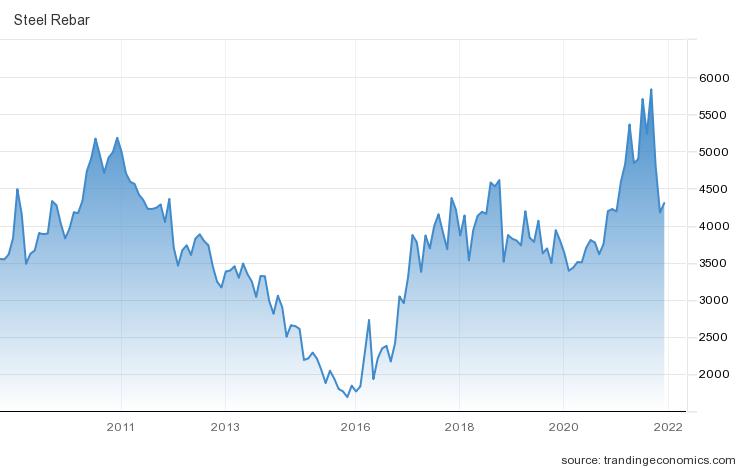
It’s no secret that construction costs are on the rise, with the upswing in the global economy, an increase in the number of building projects, and an ever increasing global market, there is a direct correlation between the above mentioned factors and supply vs. demand. 

Globally, there has been a decrease in the availability of raw materials due to not only demand, but also the decreased output capabilities of some major suppliers.

How does all this affect your building project?

• In the past, price increases were most often forecast with ample time for owners to make smart decisions in advance on when and how to move forward with their projects, as of lately the volatile market is experiencing literally overnight price updates that makes it complicated for decision makers to anticipate this as the new normal and be ready to act in order to protect their budget. 

A 10% increase in raw steel prices on a $100,000.00 project is and additional $10,000.00 immediate cost. As your steel supplier, we do everything in our power to assess the markets and communicate closely with our factories to stay ahead of the pricing curve, and we always work with our clients to minimize the risk to your bottom line with timely information.

• The size and design of your project is obviously another key factor affected by price increases. A project that initially uses 150 tons of steel may be a candidate for redesign with critical thinking (value engineering) that allows for a deduction in overall steel while maintaining the desired footprint and structural integrity. Every one of our structures goes through rigorous design process that allows for maximum efficiency that translates into cost savings for our clients.

• Price increases on steel can have a dramatic effect on funding, especially for pending projects about to begin. Most lending institutions insist on the upfront costs to be identified, and it is often an additional negotiation with the financing institution when the planned budget increases, another reason to make sure order of your project is placed with a fixed price right after funding and deposits are secured.

• The price fluctuations of steel also affects the price of the cladding & roofing materials and the accessories of the metal buildings. Roofing and cladding sheets and insulated panels are also made of steel, therefore, the price increase in the steel primarily affects the cladding material costs.

Conclusion

Price fluctuations are the “new normal” in today’s economic times, at least for the foreseeable future. With that said, building with steel is, and will always be the best choice for commercial construction in both time and money. With a proper planning, a good understanding the markets, along with an experienced supplier like Tekmetsan, you can manage all the risks and deliver a success story.

We work hard for our clients to achieve success in every project we are a part of.

Steel Frame Members

Steel Frame Members

In a steel framed building system, load-bearing and load distribution functions are ensured by installing a main frame consisting of beams and columns.

Columns

The main purpose of the columns is to transfer the vertical loads to the foundations. However a part of the horizontal actions (wind action) is also transferred through the columns.
In multi-storey buildings, the columns are heavily compressed and they are designed for buckling

Variable profile sections can deliver a certain architectural dynamism to the design of these columns.
Formed from standard sections or plates, these columns have as their main characteristic variable lengthwise dimensions which can optimize their structural function.

Beams

Beams spread the vertical loads and are mainly subject to bending. The beam section must therefore present sufficient stiffness and strength in the vertical plane.

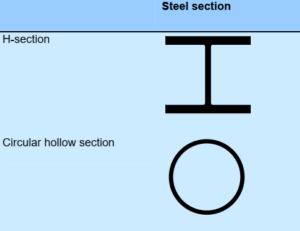
There are many different types of beam, as shown in the below table. Amongst these, composite beams are particularly well suited to multi-storey buildings. 

When combined with steel, the concrete works in compression and the steel (mainly) in tension: the outcome is a system that offers good mechanical performance, both in terms of resistance and stiffness.


Bracings

A bracing system is a secondary but essential part of a steel structure. A bracing system serves to stabilize the main girders during construction, to contribute to the distribution of load effects and to provide restraint to compression flanges or chords where they would otherwise be free to buckle laterally.
In order to avoid bracing between the beams, it is possible to design rigid-jointed continuous frames. Multi-storey buildings with a load-bearing structure formed of rigid frames
often require an increase in the column section and sometimes in the beam
section.
Since ensuring stability by frame action is less economical than by bracing, a
combination of the two systems can provide an efficient and balanced solution.
It is possible to have frames in one direction and to use bracing for stability in
the perpendicular direction.

How to select the right paint for steel?

How to select the right paint for steel?

Selecting the correct paint system for protection against corrosion assures that the most economical and best technical solution is achieved.

A weak paint system might be cheaper at first but additional maintenance cost in the lifetime of the building might boost the overall cost. On the other hand an excess of paint for a very low corrosion environment will be a mismanagement of the project budget.

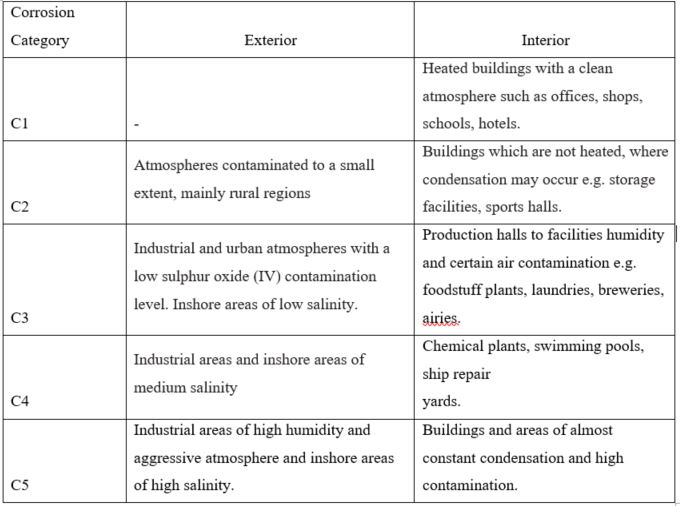
Identifying the corrosion category of the environment is the most important factor to consider before selecting a protective coating.

When selecting a paint system it is vitally important to define the conditions in which the structure, facility or installation is to operate. To establish the effect of environmental corrosivity, the following factors must be taken into account:

• humidity and temperature (service temperature and temperature gradients)
• the presence of UV radiation
• chemical exposure (e.g. specific exposure in industrial plants)
• mechanical damage (impact, abrasion etc)

The nature of the environment and the corrosive contributing conditions will have an effect on:

• the type of paint used for protection
• the total thickness of a paint system
• the surface preparation required
• minimum and maximum recoating intervals
Corrosion Categories

ISO 12944 distinguishes 6 basic atmospheric corrosion categories:

C1

Very Low

C2

Low

C3

Medium

C4

High

C5

Very High

C6

Extreme

The characteristics of the above categories are as follows;

For every steel structure project, we set the relevant corrosion category together with our clients and determine the paint system according this category.

Tekmetsan offers mainly 4 types of paint coating
1.Alkyd Coatings

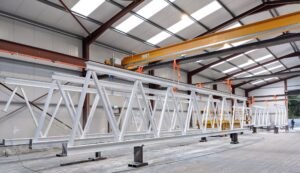
Alkyd paints are the modern descendant of oil paints. Instead of pigment suspended in oil, alkyd paints are typically formed by an alkyd resin dissolved in a thinner. These one-component primers are easy to apply and economical but offer limited
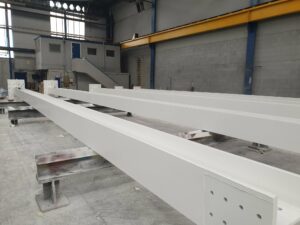
protection against rust in the long run. For low corrosive environments, these paints can be used for budget purposes.

2. Epoxy Coatings

Epoxy coatings are typically comprised of an epoxy base and a curing agent. A wide variety of coating properties can be achieved by manipulating either of these components: 
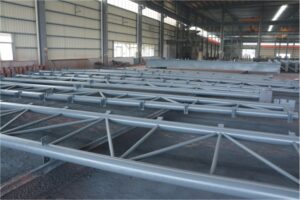
Epoxy polyamide coatings offer great moisture resistance, epoxy mastic coatings offer exceptional film thickness and phenolic epoxy coatings offer good chemical resistance. 

And due to this versatility, you’ll find epoxies used as a primer, intermediate coat or even a topcoat depending on the needs of the application.

Advantages
• Abrasion resistant
• Chemical resistant
• Good performance when submerged
• Can easily build film thickness for enhanced abrasion resistance
• Can be formulated to exhibit a wide variety of favorable coating properties


Disadvantages
• Chalks when exposed to UV light
• Low flexibility

3. Polyurethane Coatings

Polyurethane coatings are widely used —often as a topcoat— in applications where durability and abrasion resistance are key considerations. 

Most often, polyurethanes are chosen as the topcoat of a total protective coating system. For example, polyurethane might be applied as a topcoat above a zinc-rich primer and epoxy intermediate coat. 

Polyurethanes are versatile enough to be formulated to handle a wide variety of service environments.

Advantages
• Abrasion resistant
• High gloss and color retention
• Aliphatic polyurethanes perform well against weathering and UV light
• Aromatics perform well when submerged
• Low VOC formulations available

Disadvantages
• Contains isocyanate (-NCO) ,a harmful carcinogen
• Skilled workers and protective equipment are necessary for application
• Higher priced than epoxies
4. Zinc rich Coatings

As a generic coating type, zinc-rich coatings refer to organic or inorganic coatings with high loadings of zinc dust. 

The zinc provides galvanic protection of the steel surface, meaning that it will corrode instead of the steel beneath it. 

As the zinc-rich coating corrodes it forms a barrier between the steel and its environment

Zinc-rich primers will often be applied as part of a two-coat (zinc-rich primer, polysiloxane topcoat) or three-coat (zinc-rich primer, epoxy intermediate coat, polyurethane topcoat) system. 

Advantages
•     Provides both galvanic and barrier protection to steel
•     Abrasion resistant
•     High level of durability

Disadvantages
•     Must be top coated in many applications
•     Both inorganic and organic variations
have low resistance to acid and alkali
Conclusion

The prevailing service environment —along with factors such as cost, accessibility of the asset, expected labour costs and desired service life of the coating system— will define which coating system is best-suited for your application.

Coating selection happens on a case by case basis, and we can evaluate the specific needs of your application, offering several systems that could work based on our decades of experience in the industry.

Contact our team to get more information about the coating options of your metal building project.

Steel Anchoring

Steel Anchoring

TEKMETSAN supplies a detailed Anchor Bolt Plan with every metal building system. These plans show the building dimensions, the precise locations for anchor bolt placement, and the total number of foundation anchor bolts required in the structure. 

Anchor bolts are not just the connection elements between the steel and concrete surfaces but they are one of the most important element in a steel structure. Anchor bolts are responsible for the transfer of loads between the steel and concrete member.

Depending on when the anchors are installed, anchors used by Tekmetsan are classified into two categories;

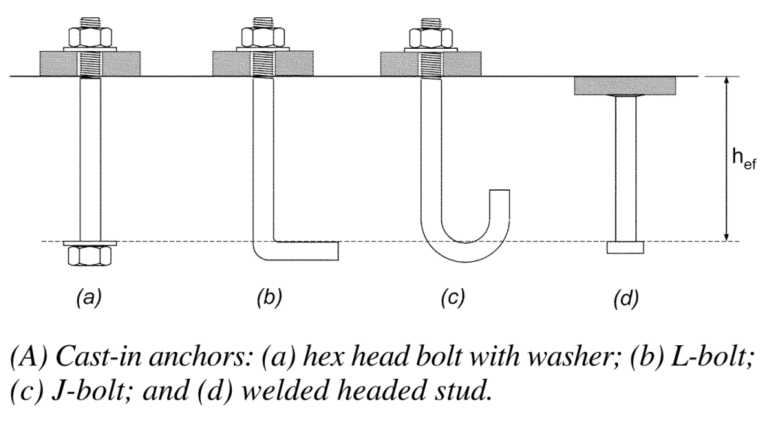
1. Cast-in Anchors

These are the type of anchor bolts that are installed in place before pouring the concrete and are efficient in handling forces of high magnitude. Bolts are firmly held in place while the concrete is poured to maintain proper alignment and position.

The size and location of the anchors can be determined from construction drawings.

 In the below figure, you can see some examples of cast-in anchors.

2. Adhesive Anchors ( Chemical Anchors)
Adhesive anchors are anchor bolts that are placed in a pre-drilled hole, which contains an adhesive that dries and bonds to the anchor rod thread as well as the concrete.
Adhesive anchors, also known as epoxy anchors or chemical anchors, are capable of reaching high bond-stress values in relatively fast cure times.
Adhesive anchors are fully threaded rods that can be supplied in many different grades and finishes and can be cut to any length required for a given application.
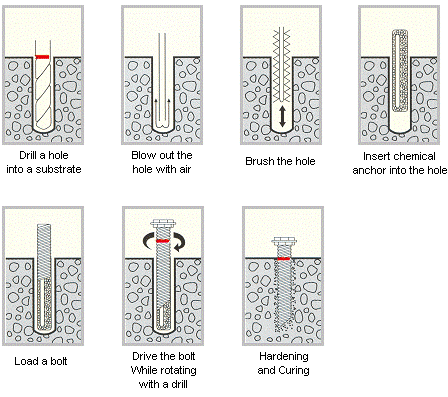
How to install epoxy anchors?

Good installation is critical to performance. Here is the 5-step for the installation. 

1. DRILLING: Drill correct hole size and depth on concrete/brick/stone/masonry.

2. HOLE CLEANING: Blow out dust and clean the hole with brush, then blow out remaining dust.

3. INJECTING: Inject mixed adhesive from the bottom of the hole.

4. INSERTING: Insert and rotate stud/bolt/anchor/rebar/threaded rods into the hole.

5. HARDENING AND CURING: Time table refer to TDS. Don’t touch until full curing.

• All structural columns on a building must be anchored by at least four anchor bolts

• The placement of all actor bolts on the structure must adhere to the approved Engineered Foundation Plan

• All anchor rods shall be placed with their longitudinal axis at a 90-degree angle to the surface of the foundation

• A template (preferably steel) must be used to insure exact placement of anchor bolts in concrete.

steel and earthquake

Steel and Earthquake

There is a mistaken belief among some people that steel buildings do not do well in earthquakes. The truth is quite the opposite. In fact, steel buildings have a distinct edge over concrete in earthquakes. The reason, however, is counter-intuitive, and worth understanding.

We tend to think that the heavier and more rigid an object is, the stronger it is. This assumption is especially common regarding buildings, because our day-to-day experience validates it. If you’ve ever been in a wooden house during high wind, and heard the timbers creaking and groaning ominously, you might have wished the structure was concrete. We assume that the weight of concrete would help hold the house down, and the unbending nature of concrete would resist the swaying under the wind impact. That makes sense if the impacts are on the scale of a truck hitting a wall, or even a hurricane. 

However, an earthquake is different than other loads. It isn’t a surface force threatening to sweep the house off its foundation. The earth itself moves, moving the foundation of the building. It’s more like a strong bucking bronco, trying to shake the house off its back.  

Steel construction is lighter in weight than concrete, without compromising strength. It has less mass – and therefore less force – to damage itself under seismic shaking. It requires less earthquake resistance to be built into the superstructure and into the foundation, potentially lowering construction costs, too.

Moreover, steel makes a more resilient structure because it is a more ductile material, allowing it to bend considerably before breaking. It will respond better in an earthquake than a more brittle structure. In smaller seismic events, a steel building is more likely to snap back than it is to crack. Should the maximum seismic event for which the building is designed occur, there may be severe deformities, but it won’t undergo progressive collapse. 

Tekmetsan Steel Structures will meet or even exceed all local building codes including seismic codes. Let us know the location of your building and we will provide the ideal steel design for your building.

Value Engineering Structures

Value Engineering Structures

More than one reasonable, safe and acceptable solution can often be applied to a particular design. Value engineering asks: “Which acceptable solution is most economical?” and “Does an entirely different and better approach exist?” To answer both questions effectively, depth and breadth of experience is required.

The performance benefits of steel in relation to strength, stiffness, lightness, prefabrication and quality are facilitated by a range of principles for value engineering at each stage of a project and across a number of stakeholders, including: 

• lighter is not always better 

• utilise prefabrication and modularisation when appropriate

• implement responsive member and connection detailing

• repetition and standardisation

• design for construction 

• minimise the potential for variations

design for economy 

• life cycle costing

Vastly experienced Tekmetsan engineering department provides value engineering for all projects even without it is requested by the client. We believe having over 70% repetitive or referred clients is the outcome of this standard procedure. 


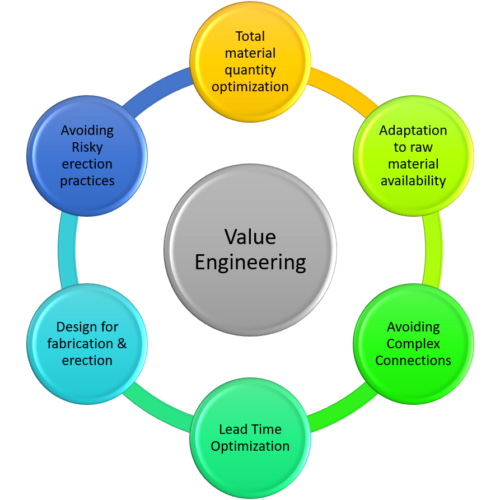
Some value engineering activities that we are constantly checking are;

• Suggesting changes to parts to give better nest utilisation and avoid material wastage

• Designing parts for manufacture that suit existing capabilities

• Taking down material gauges but adding design features to retain structural integrity

• Making assemblies easier to assemble

• Adding features which will provide fast and safe erection

• Substituting materials based on the availability on the market and price levels.