Steel building assembly

Steel building assembly

In our fast-moving world, steel buildings are offering great value to consumers.
Their large span design, versatility, and fast erection make them the ideal choice for the people investing in buildings for workshops, residential buildings, commercial and industrial space and many more other building types.

The versatility is only limited by your imagination during the design process.
The accuracy of the manufacturing of steel buildings makes erecting a steel building quick and safe; therefore, occupancy can be in weeks rather than months.

Much like any construction, careful attention must be given to the below considerations for standing a building.
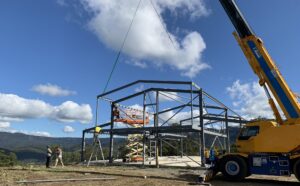
What are the basic requirements to start erection ?

1. A good packed flat excavated surface is the start for the whole process. A groundwork contractor may help you to 

2. The concrete must be poured correctly with a flat uniform surface. Dips or valleys will cause you problems in the later stage if they are not dealt right after the pouring. 

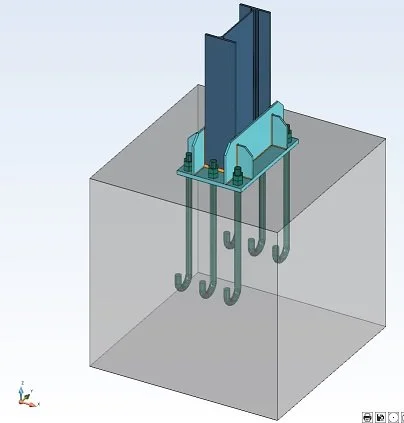
3. The anchor bolts must be set and squared off to insure fit for the building columns. The blueprints provided by Tekmetsan is your guide in the anchor bolt instalment. We always recommend you to consult a land surveyor whilst placing the anchor bolts.

4. An erection must be performed according to the manufacturer’s assembly requirements. There should not be corrections needed if all phases of this project are complying with the stamped prints supplied. 

5. An accredited building manufacturer should be assigned. The building can only be erected in a safe and timely manner with no delays if the manufacturer supplies good quality and correctly manufactured parts.

How long should erecting a steel building take?

This is a frequently asked question, and the answer is dependent on several factors.

There are certain things that cannot be counted on when an erector gives you a quote to build your steel structure.

• Is the foundation ready and anchor bolts correctly placed?

• Weather forecast- Any rainy or snow days ahead

• All the steel parts are ready on jobsite.

• Any damaged or faulty part?

• Access of the crew and lifting equipment to the jobsite is possible

When an erector is scheduling their works, they have to take into account the equipment and crew required at the job site, how long it should take to complete various stages of erection, and making sure they can get to their next scheduled appointment on time.

When the next job is scheduled and any of the above problems happen, the equipment and crew become idle which will cause a financial burden either to erector, the customer or both. Crews have to wait and reschedule equipment and manpower to return for better weather or new parts. Also delays may affect the schedules of the next job of the erector causing them losing their next job. It is very important to us at Tekmetsan that the erectors have all they need. And also all parts are correct and accounted for. We provide detailed assembly drawings and part drawings to make the job of the erector as easy as possible. The easier and faster the building goes up is a compliment to us and also a value for our customers.
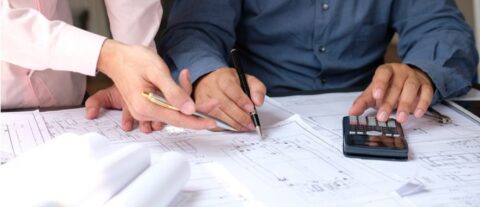
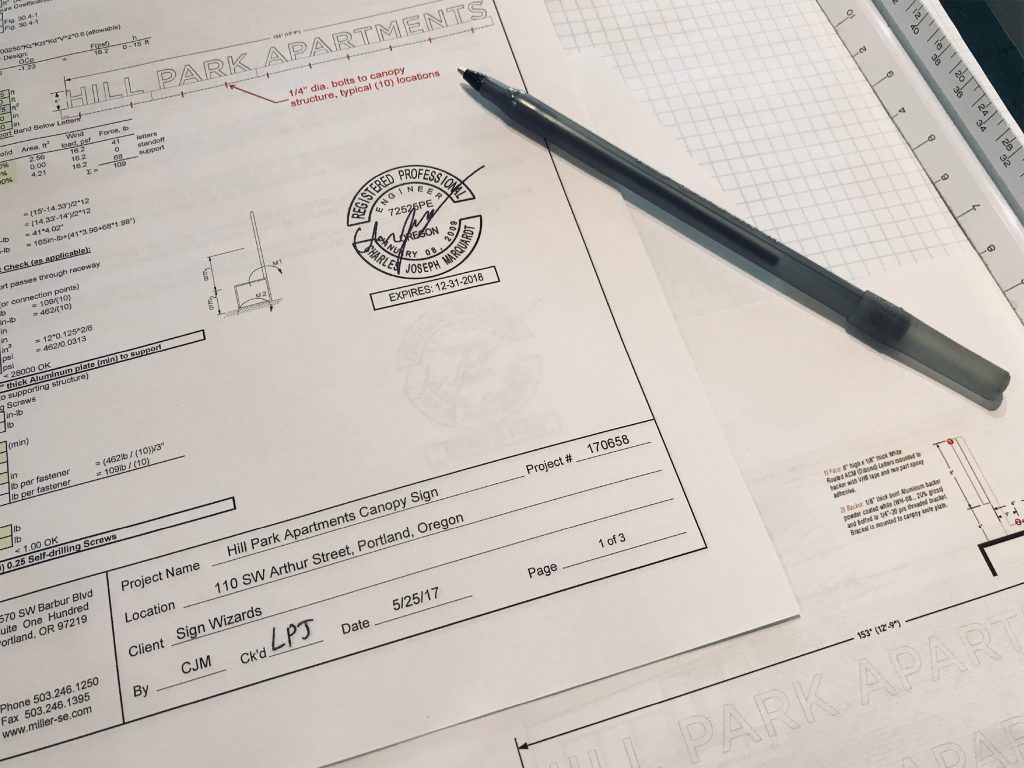
Erection check list

Foundation: anchor bolts are placed correctly and levelled

• Access to the jobsite for delivery of the materials, equipment and crew

• Clear job site around the foundation so materials can be separated and stacked as needed

• Equipment to unload the truck and manpower to inventory bundles and crates.

Engineer of Record for the Steel Building

Engineer of Record for the Steel Building

The engineering team of Tekmetsan has a wide range of structural diversity and expertise. With more than 10 years of experience in the metal building industry, we can meet any of your structural design needs for your next metal building project. 

However, typically the metal building manufacturer is only responsible for the structural design of the metal building system. Items not provided by Tekmetsan must be designed by “another” design professional. 

Please see below for a list of services that that should be provided by the EOR (Engineer of Record).

  • Local Building Codes
    • Code & Design Load Determination
    • Serviceability Determination
    • Other
  • Foundation Design
    • Footings and Slabs
    • Block Foundations
  • Wall Cladding Design
    • CMU
    • Tilt-up Concrete
    • Brick and Metal Studs
  • Retrofit of Existing Buildings
    • Expansion
    • Occupancy Change
    • Unanticipated Load Additions

Metal building systems have evolved over the decades into collection of structural items that work together as a very efficient structural system. The fundamental parts of the metal building system are: primary members of load bearing frames, secondary members composed of wall girts and roof purlins, bracing and cladding. Metal building system design may seem simple at first, but the complex interaction of these components into a durable and robust system is a challenging engineering job. Tekmetsan have demonstrated this experience and are on the leading edge of systems design.

In a metal building systems, design responsibilities are usually divided between the manufacturer and the design professional or EOR (Engineer of Record). Therefore, a clear understanding of their respective roles, as well as coordination and interaction are vital for success. Tekmetsan has a deep experience engaging with clients’ EORs and interact in the most effective way from initial contact to the completion of the building construction.

For a successful project execution and compliance with the local building regulations, the building manufacturer is responsible only for the structural design of the metal building system it sells to the building.
The manufacturer is not the EOR for the construction project. The manufacturer is not responsible for the design of any components or materials not sold by them.
Nor are they responsible for the interface and connection of other components with the metal building system, unless such design responsibility is specifically required by the order documents.
However, Tekmetsan always take a further step and engages in the design of the components which are connected to its steel building system.
It is the responsibility of the metal building manufacturer to design a metal building system to conform to the specifications, including the design criteria and design loads incorporated by the builder.

We recommend that the customer to work with a local EOR which will be responsible for specifying the design criteria for the metal building system.
These design criteria should include the geometric requirements, all applicable codes and design loads, site and construction conditions that affect design criteria, and serviceability criteria.
This will enable the client to ensure the builders/manufacturers bidding on the project understand and interpret the requirements in a similar and accurate manner.
Just as importantly, a proper specification ensures the building performs satisfactorily and meets the owner’s requirements.
The metal building system is just one element of the total construction project.
Tekmetsan does not provide site preparation, mechanical work, electrical design, and certain building envelope components/accessories.
The EOR is typically responsible for these important elements of the project as well as floor slabs, interior/exterior concrete masonry and /or tilt-up walls, and the connection of these walls to the metal building framing.
With regard to the foundation design, Tekmetsan does prepare the anchor bolt plans showing the location, diameter, and projection of the bolts required to attach the metal building system to the foundation.

Conclusion

Tekmetsan engages with the clients’ EOR throughout the project to provide a smooth progress and peace of mind to its customers while at the same time complying local building regulations and specific project requirements.

Quality Assurance of Tekmetsan Steel Structures

Quality Assurance of Tekmetsan Steel Structures

At Tekmetsan, we go above and beyond to provide our customers with the best quality metal building systems we possibly can. 

Metal fabrication requires an eye for detail, and with so many variables coming into play it is crucial that those overseeing your job have the knowledge and experience necessary to deliver a quality product. 

Sloppy and hasty workmanship can negatively affect the appearance, structural integrity and overall lifespan of the steel structure.

In this post, we’ll be shedding some light on the quality assurance procedures and what makes our structural steel stand out from our competitors.

 
The Need for Quality Assurance

Metal fabrication is not a simple process, particularly when it comes to structural steel. You are already aware of the incredible properties of steel which include its strength, longevity, aesthetic appeal and robustness to name just a few. 

But what you may not be aware of is that poor refinement and fabrication can compromise the finished product, leading to vastly reduced strength and longevity.

At Tekmetsan we keep a close eye on the finish, aiming to remove all defects prior to delivery to ensure a great customer experience.

How We Ensure Quality

1. Cutting Edge Equipment & Machinery
We invest in the success of our business, using the CNC controlled machinery ensuring they are calibrated on a regular intervals. We hold regular quality assurance inspections to ensure our equipment are in good condition and all welding/fabricating equipment is properly functioning.

2. Experienced Staff
Our production team have extensive training/qualifications and experience in welding, and they recognise their role within the customer experience. We utilise tried and true welding methods and oversee all work to ensure that it meets our strict specifications.

3. Expert Steel Knowledge
Tekmetsan has been in operation since 1971. As a leading Turkish steel fabricator, it goes without saying that we know our product. We have expert knowledge on the different types of steel and what they are like to work with, and our aim is to make working with steel easy. With the right processes, people and vendor relationships in place you can rest easy knowing that we are the steel experts.


4. Strong Relationships with Mills and Vendors
We source our steel from renowned mills and vendors who share our passion for quality. Throughout our history we have developed strong business relationships built on trust, and our vendors know that we make no compromises when it comes to the quality of our materials. We pay close attention to the grade of steel, carbon levels, alloy composition and tensile strengths to ensure it meets your exact specifications.

5. Attention to Detail
Structural steel fabrication must be carried out with care and attention to detail, otherwise the longevity and safety of a structure will be compromised. Just a few millimetres difference could bring a project to a halt. We have processes in place to ensure all design/measurement specifications are adhered to.

6. Weld Quality Management
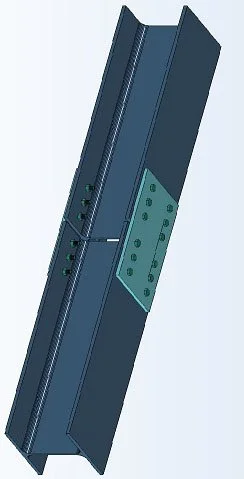
We have a full-time Internal Welding Coordinator, a Quality Assurance Checker and an external Welding Coordinator who are solely responsible for overseeing manufacture and fabrication of our steel structures.

We also have strict weld quality management processes in place and are certified as a structural steelwork manufacturer up to Execution Class (EXC) 2 in accordance with BS EN 1090-2:2008+A1:2011.

Our Fabrication and Welding team members performing welding duties have demonstrated their competence skills in accordance with EN 9606-1 and are all trained in Defect Identification and Visual Inspection of Welds.

7. Accreditation, standards and quality

We are ISO 9001 Quality Management System accredited and CE Marked.

CE marking of our construction products is achieved through our Factory Production Control (FPC) in compliance with EN 1090-1: 2009 + A1:2011.

All of our structural steelwork conforms to current international codes.

Steel Structure Connection Types

Steel Structure Connection Types

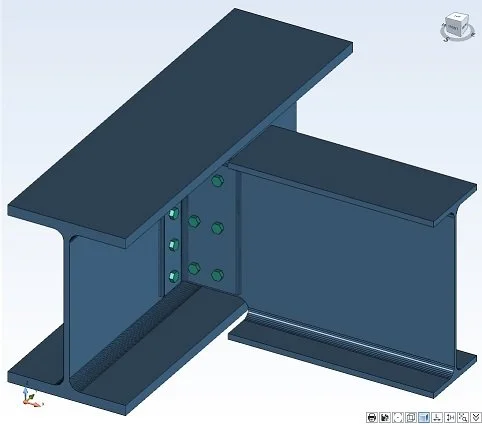
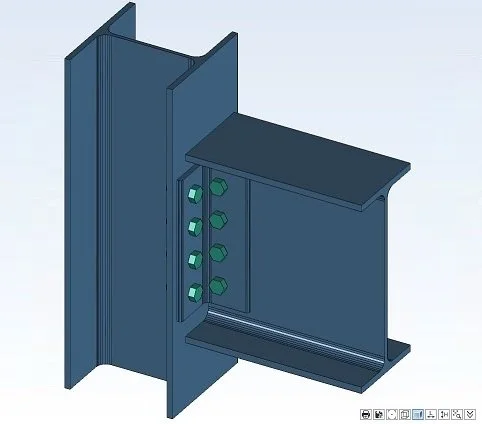
When it comes to steel construction, steel connection is one of the most crucial design component, in terms of cost as well as integrity of the structure. If connection types and arrangements are not carefully chosen, it can account for up to 20% of total cost of the production.

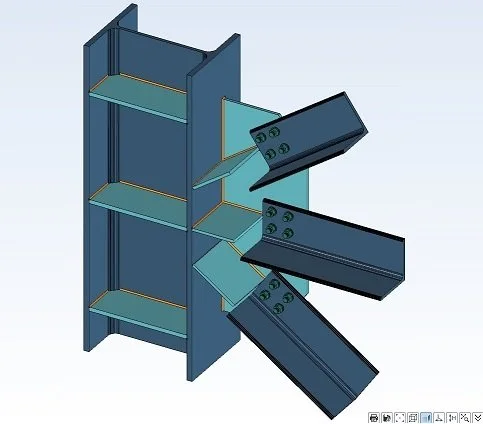
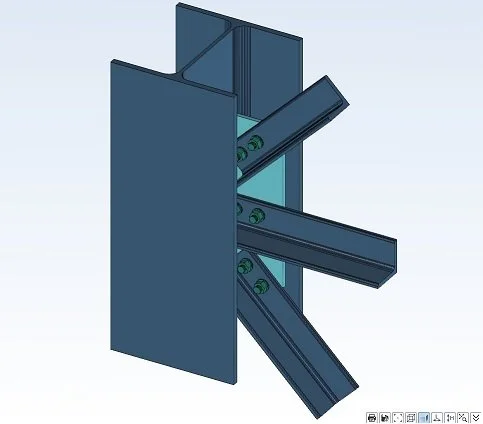
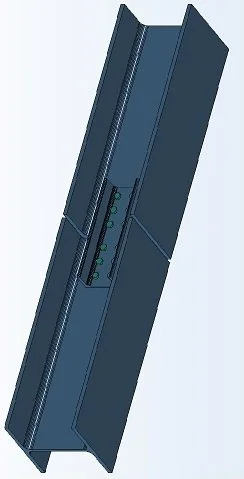
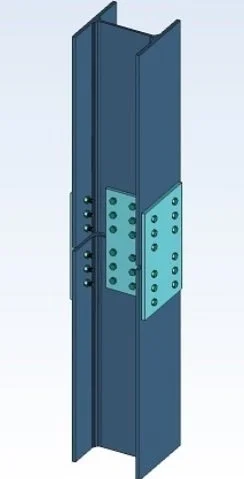
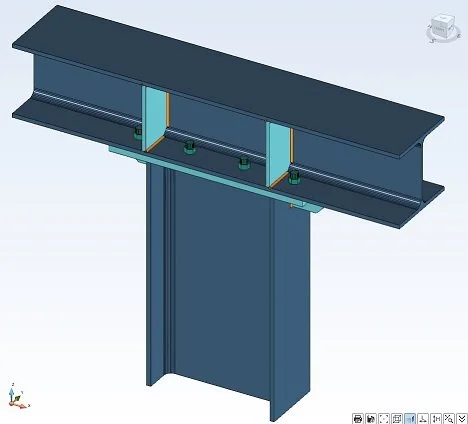
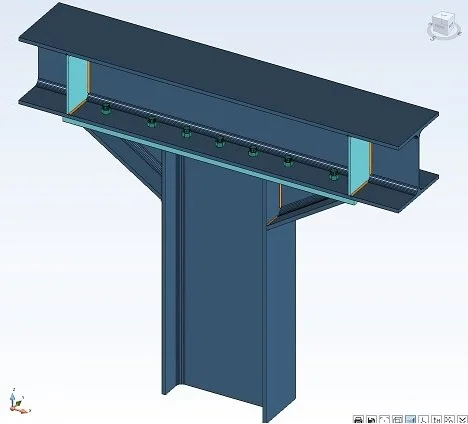
Most commonly used connections are the bolted connections.  This connection has the advantage of flexibility in assembling parts of the structure as well as dissembling it and which is necessary if there is inspection or some routine maintenance. This type of connections is applicable for members subjected to tension or shear or both tension and shear. 

The advantages of bolted connections are as follows:

• The process of erection of structure can be made faster.

• Skilled labours are not necessary.

• Connections do not involve the noise.

• Less labour requirement

• Immediate use of structure is possible in case of bolted connection.

• The alternative arrangement of structural members is possible if required.

• Lesser working area is required.

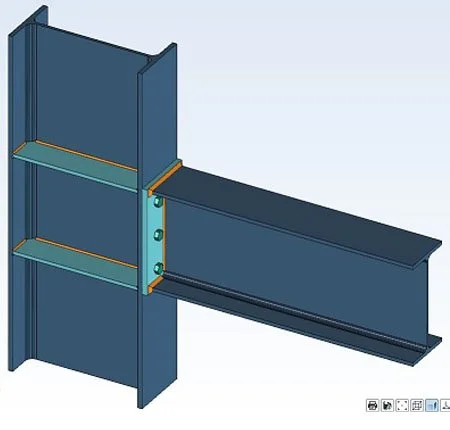
Some frequently used connections are

 
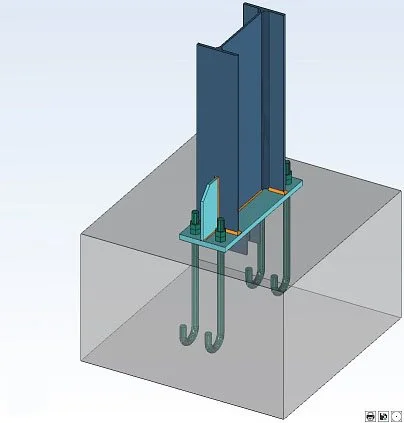
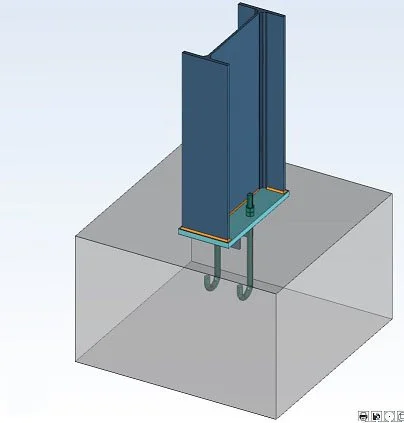
• Base plates
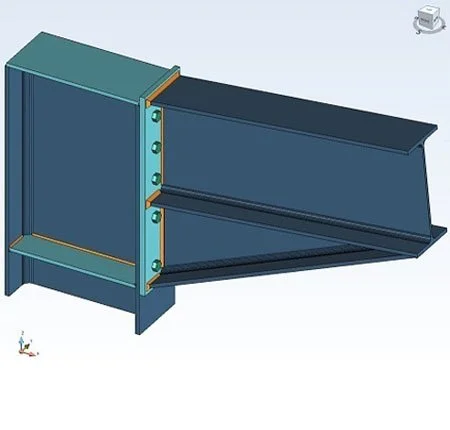
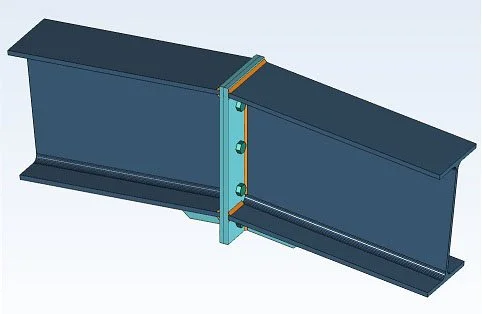
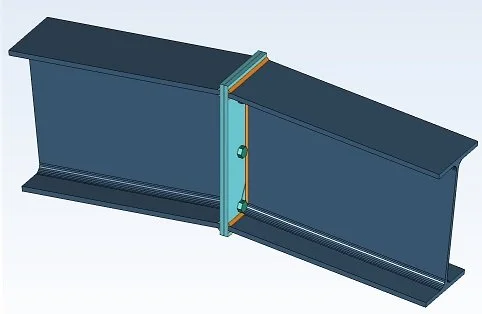
• Fixed moment end plate
• Apex Haunch
• Clip Angle
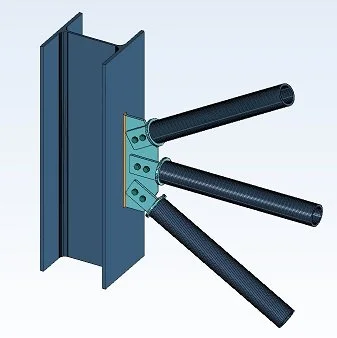
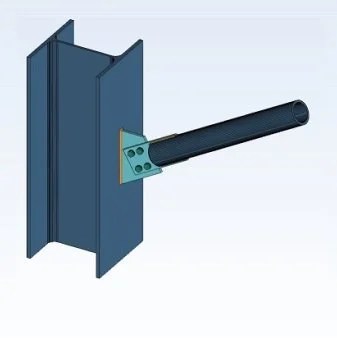
• Gusset
• Splice
• Gable wall
• Bracing

Metal building for your auto repair workshop

Metal building for your auto repair workshop

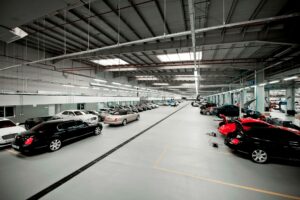
Many mechanic shop owners choose steel buildings for their shops because they offer all advantages of low-rise steel construction methods.  A high-quality metal building promises great value— and it delivers on that promise. 

Why Auto Shops Choose Steel Buildings

There are seven main reasons to use pre-engineered metal buildings for auto shops.

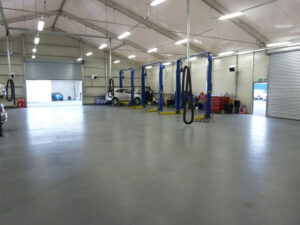
1. SPACE: Our metal auto shop buildings feature clear-span framing which eliminates the need for interior load bearing supports, maximizing workable floor space in your auto shop or mechanical building. Without interior columns, you can more easily manoeuvre vehicles inside, creating drive through functionality. You can customize the height of your building up to 12 meter to easily accommodate car lifts. Also our large spans 

2. FAST ERECTION: Tekmetsan steel buildings offer fast construction time for the erection of the workshops. All the steel parts of your building arrives clearly marked and ready to assemble. Experienced owners may even decide to erect the framing themselves to cut construction costs. Our team will support you in the erection process.

3. NON-COMBUSTIBLE: Steel is not a combustible material therefore frequently used flammable products such as gasoline, oil and etc does not bear high risk for the steel structure. Also our fireproof insulated panels are ideal for workshop roof and walls.

With the flexibility metal buildings offer, you’re free to customize the interior of your automotive repair building with functionality & efficiency in mind.

You can configure bays in a variety of sizes and layouts depending on your needs. You can also add an office space or waiting area wherever you’d like. A lot of our clients prefer mezzanines for their offices or storage area in order to save space on the ground floor.

Tekmetsan offers built in mezzanine systems and steel stairs incorporated into the workshop structure.

TEKMETSAN Metal Buildings for Auto Shops

All commercial building owners, including auto service owners, want a well-built, long-lasting structure that holds the value of their investment. That means they want a TEKMETSAN steel building.

Make your upcoming auto industry construction project a TEKMETSAN steel building. TEKMETSAN auto garages provide years of trouble-free service.  

Advances in steel building engineering and manufacturing allow us to custom design a prefab metal building quickly and economically.  And with the TEKMETSAN steel building system, later expansion of your auto shop is quick, easy, and inexpensive.

Conclusion

Tekmetsan offers custom design metal workshops for mechanics and repair shop owners. Our long lasting buildings with our excellent customer service offer high value for your money and exceed your expectations.

Steel Structure Galvanizing

Steel Structure Galvanizing

Galvanizing is the process of applying a protective zinc coating to prevent rusting.
The most common method is hot-dip galvanizing, where the steel parts are submerged in a bath of molten zinc.

Hot dip galvanization is a highly-specialized job therefore at Tekmetsan, galvanization works are subcontracted to the specialized subcontractors.

Although it is a more expensive type of coating compared to 2 layer organic paint coating, hot dip galvanization offers the below great advantages;

1. Durability

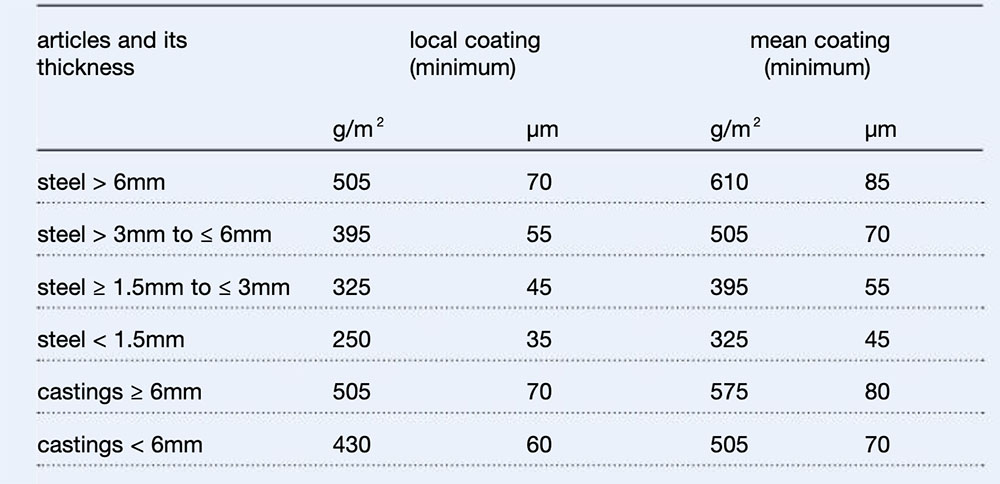
A galvanized coating is one of the most durable forms of corrosion protection on the market. An average coating thickness of 85 microns, the same thickness as a sheet of A4 paper, can protect a steel framed building for the better part of more than 50 years.

2. Sustainability

The long-term durability provided by galvanizing is achieved at relatively low environmental burden in terms of energy and other globally relevant impacts.

3. Reliability

Galvanizing is a relatively straightforward and closely controlled process. The coating formed is consistent, predictable and simply specified. Hot dip galvanizing is defined by a single standard – EN ISO 1461.

Unlike a paint coating, the metallurgical bond that is formed through galvanizing becomes part of the steel itself and is not merely a chemical or mechanical bond.

Due to the metallurgical bond that is formed when steel is dipped into molten zinc, a galvanized coating offers straightforward, secure protection from the get-go. Hot dip galvanizing requires rust-free, uncontaminated steel for the process to occur. Once the coating is present, it is impossible for it to fail from underneath. Other coatings can adhere to residual contaminants, this can undermine performance, lead to flaking and cause premature failure.

4. Predictability

A galvanized coating offers predictable corrosion protection that weathers in a linear fashion. Coating thicknesses are measurable and offer lifespans that can be easily forecast and relied upon.

Batch hot dip galvanizing is a standardized process which produces a quantifiable coating thickness. The coating is simply specified through European and international standards.

The coating thickness depends upon the gauge of the steel that is galvanized and is produced consistently across the component, both inside and out. This can be measured easily throughout its lifetime, using non-destructive methods.

5. Complete Coverage

There are multiple reasons why hot dip galvanizing outperforms other organic coatings. A crucial factor is the way the process achieves complete coverage of a component, both inside and out.

The dipping of steel into a tank of molten zinc via the hot dip galvanizing process means the zinc can access even the trickiest areas.

A further benefit of hot dip galvanizing is that hollow components are coated on internal surfaces too, meaning that a structure will not corrode from the inside out. In addition, the coating will also build up at vital corners and edges, unlike brushed or sprayed coatings, which traditionally thin out in these areas.

6. Abrasion Resistance

Galvanizing has an abrasion resistance up to ten times better than organic paint coatings. The hot dip process is unique, producing a coating which is bonded metallurgically to the steel.  As a result, galvanized steel has superior resistance to mechanical damage during handling, storage, transport and erection.

Conclusion

Along with paint coatings, Tekmetsan offers hot dip galvanization finish to its steel fabrications. It is essential to know whether products are going to be galvanised right in the beginning of the design phase in order to customise the part design for the hot dip galvanization.

How to Erect a Steel Building

How to Erect a Steel Building

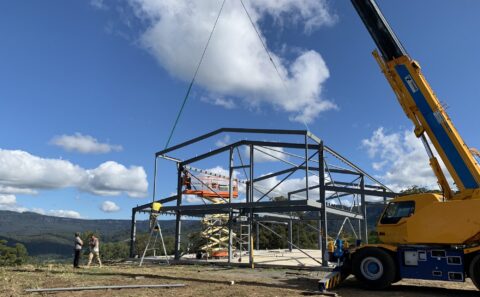
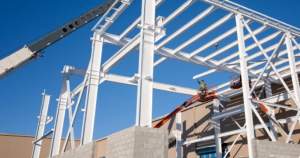
The erection of structural steelwork consists of the assembly of steel components into a frame on site. The components are then lifted and placed into position before they are connected together.

Steel erection essentially consists of four main tasks: 

• Establishing that the foundations are suitable and safe for erection to commence.

• Lifting and placing components into position, generally using cranes but sometimes by jacking. To secure components in place bolted connections will be made, but will not yet be fully tightened. Bracings may similarly not be fully secured.

• Aligning the structure, principally by checking that column bases are lined and level and columns are plumb. Packing in beam-to-column connections may need to be changed to allow column plumb to be adjusted.

• Bolting-up which means completing all the bolted connections to secure and impart rigidity to the frame.

Generally, connection is achieved through bolting but, in some cases, site welding is used. The assembled frame needs to be aligned to within tolerance expectations before final bolting up is completed. 

The completed steel frame may then be handed over to following trades in an acceptable condition. 

Design for construction

The successful construction (including erection) of steel structures safely, quickly and economically starts long before the actual steelwork arrives on site from the fabrication shop. The ‘buildability’ of the structure is influenced significantly by decisions made during the design process long before erection commences.

It is important that designers clearly understand the impact of their decisions. Design for construction is a valid design objective and one that should be considered along with the other usual design objectives in play.

Erection planning

Planning for erection should start at the very beginning of the design process. Such planning should consider the construction sequence, the design factors that affect buildability and site practice in terms of typical erection plant.


In the broader design and planning context, there are three planning factors that affect the buildability of steel structures:

1. Practical erection sequence: the location of both temporary and permanent bracing systems or other means of maintaining structural equilibrium are crucial here

2. Simplicity of assembly: simply assembled connections are the main factor here

3. Logical trade sequences: which will affect the development of the master contract programme as the pre-tender plan metamorphoses into the construction plan.

Conclusion

Tekmetsan supports its clients during the erection works and offers free consultation and installation guideline to assist the clients.