




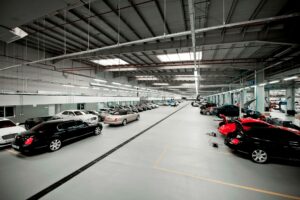
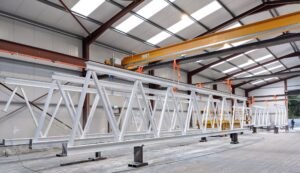
 2. FAST ERECTION: Tekmetsan steel buildings offer fast construction time for the erection of the workshops. All the steel parts of your building arrives clearly marked and ready to assemble. Experienced owners may even decide to erect the framing themselves to cut construction costs. Our team will support you in the erection process.
3. NON-COMBUSTIBLE: Steel is not a combustible material therefore frequently used flammable products such as gasoline, oil and etc does not bear high risk for the steel structure. Also our fireproof insulated panels are ideal for workshop roof and walls.
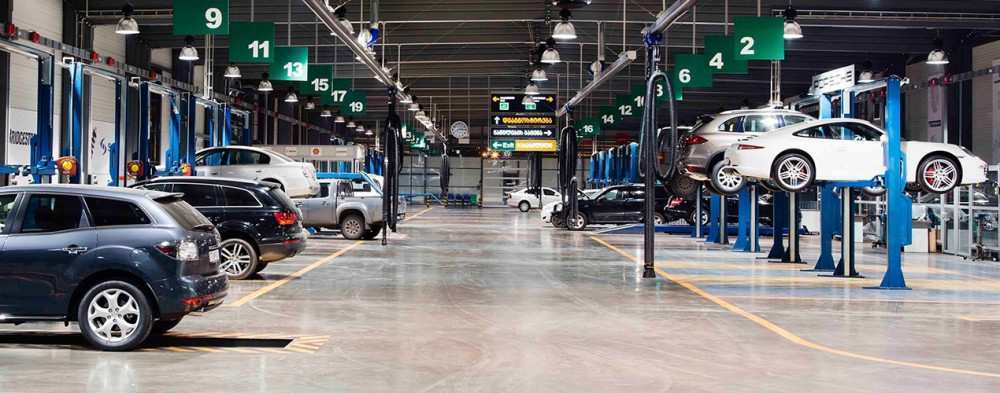
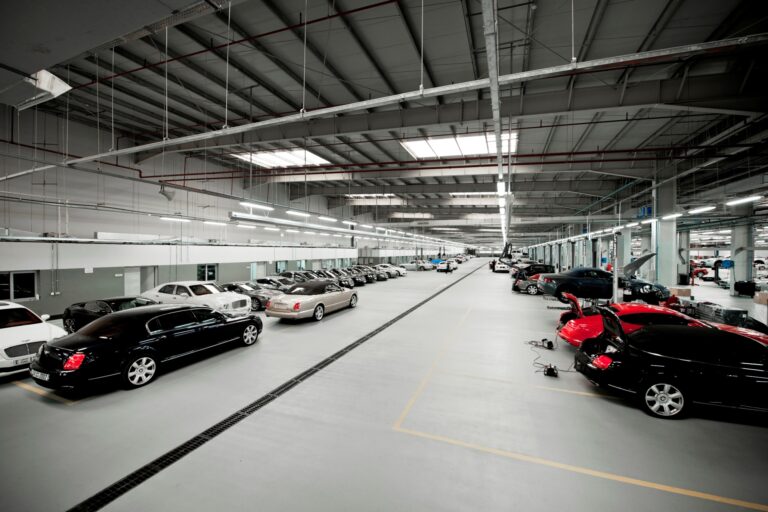
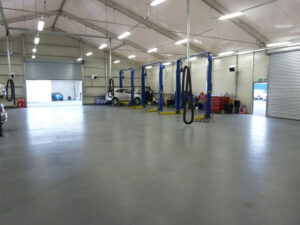 With the flexibility metal buildings offer, you’re free to customize the interior of your automotive repair building with functionality & efficiency in mind.
You can configure bays in a variety of sizes and layouts depending on your needs. You can also add an office space or waiting area wherever you’d like. A lot of our clients prefer mezzanines for their offices or storage area in order to save space on the ground floor.
Tekmetsan offers built in mezzanine systems and steel stairs incorporated into the workshop structure.

 1 – COST-EFFECTIVE





 Using steel for building costs less over time, too. For example:
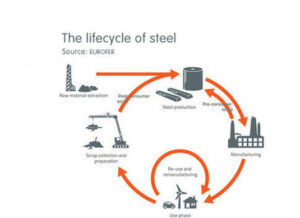 Steel buildings also outperform other frame type building in terms of sustainability as well.
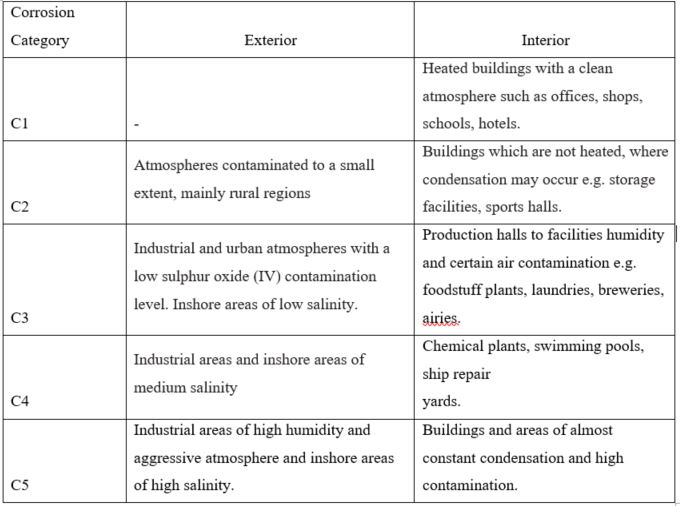
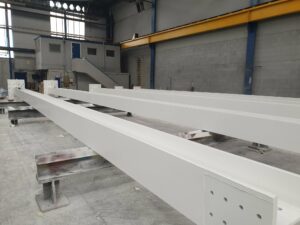 Alkyd paints are the modern descendant of oil paints. Instead of pigment suspended in oil, alkyd paints are typically formed by an alkyd resin dissolved in a thinner. These one-component primers are easy to apply and economical but offer limited
 Epoxy coatings are typically comprised of an epoxy base and a curing agent. A wide variety of coating properties can be achieved by manipulating either of these components:
  Polyurethane coatings are widely used —often as a topcoat— in applications where durability and abrasion resistance are key considerations.
 Time saving is essential for commercial builders. Every additional hour of construction raises their
  Metal Building Experts
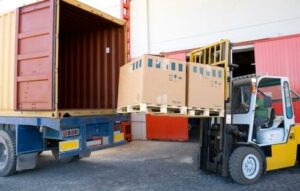 Quicker Delivery

 Prefab metal buildings are simple and easy to expand. Let us know in what direction you might expand your building and we will customize your building according to your future needs.
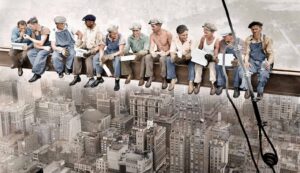 If you are using a professional erection team, they will arrange their tools and crew, however, if plan to erect your building by yourself, you need to find skilled workforce who have a general understanding of
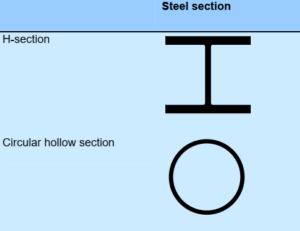 The main purpose of the columns is to transfer the vertical loads to the
 A bracing system is a secondary but essential part of a steel structure. A bracing system serves to stabilize the main girders during construction, to contribute to the distribution of load effects and to provide restraint to compression flanges or chords where they would otherwise be free to buckle laterally.